
You’re here for therapy that gets to the work.
You’re in the right place.
People come to me for all kinds of reasons.
They’re going through a hard time, someone they love is going through a hard time, they feel stuck in some aspect of their life.
Some folks say they don’t seem to have a voice. Some feel they’re living a prescription for a life rather than a life that’s theirs.
They’re navigating a terrible loss or they’re afraid of making a change they know they need to make.
Others tell me they have no idea how to like themselves, their body, their heart.
And many more.
The thing they have in common? Folks tend to come to me full of patterns of protection, reactions they find themselves doing that don’t make sense, and a feeling of “this is just the way the world is.”
Folks tend to wrap up with me feeling like they’ve found a sense of who they are and are on the path to building a life that feels like theirs, not someone else’s. They tend to tell me that we got to the root of things and it was really hard and scary, but they knew I was going to be there the whole time, guiding them carefully and respectfully.

Choosing a therapist is tricky business. Most clients know how they want to feel in therapy (safe, heard, seen, helped) but find it’s hard to figure this out on a website.
Here’s what I can offer on this page to try and help you decide if you’d like to reach out to me:
The answers aren’t going to come from me, but I have a lot of experience in helping people find the answers within themselves.
Who do you see?
While I see folks who have all kinds of backgrounds and needs, most of my clients come to me to deal with the impact of really hard things they went through, often as kids.
When we grow up in a way that forces our body to stay in fight or flight most of the time, we call this cPTSD. I have been working with folks recovering from cPTSD for more than 20 years.
Trauma doesn’t discriminate and often gets more specific. I also have extensive experience helping folks recover from religious/spiritual trauma, medical trauma and living with chronic illnesses, acute trauma in adulthood, and more.
Many of my clients are raising kids and trying to understand how to parent differently than how they were parented.
Many of my clients struggle to have lasting, close, safe relationships and are trying to change that.
Many of my clients feel angry, closed off, shut down and numb, or like they are just living the life they’re ‘supposed’ to live.
Sometimes its deeper. Clients knock on my door when they’re afraid they’re always failing and actually exhausted from the effort it takes to keep from letting this show.
Another way it gets more real: some folks worry inside that they are actually really and truly all alone, and all their attempts to keep other people close never feel like they fix that.
Some folks want so badly to be close with other people, to feel really connected, but as soon as they try to open up, they get overwhelmed and have to pull away.
Many of my clients are autistic and trying to both differentiate their trauma from their autism and understand how to navigate life in a world built for neuro-typical people.
And the human experience is complex and complicated. No list like this could be exhaustive. If you’re wondering if I’m the right therapist for you, reach out with your questions and let’s talk about if I’m the right person to help you.

Okay, therapy jargon time: The school of thought I subscribe to, the attachment sciences, have shown that we are biologically wired both for connection and for autonomy. When we feel distress in our lives, it often comes from a disruption in connection in an important relationship (present or past) or in our ability to be true to ourselves.
Thus, my philosophy holds that our feelings and behaviors make sense, even if they seem outwardly confusing or difficult.
Our work as client and therapist is to understand the underlying messages they offer. As I get to know you, I will help you put words to things you are experiencing and use that new understanding to explore what choices are in front of you.
We’ll work together to slow things down and discover what your emotions are trying to tell you. That discovery is the empowering catalyst that becomes the map you use to decide how to live your life moving forward.
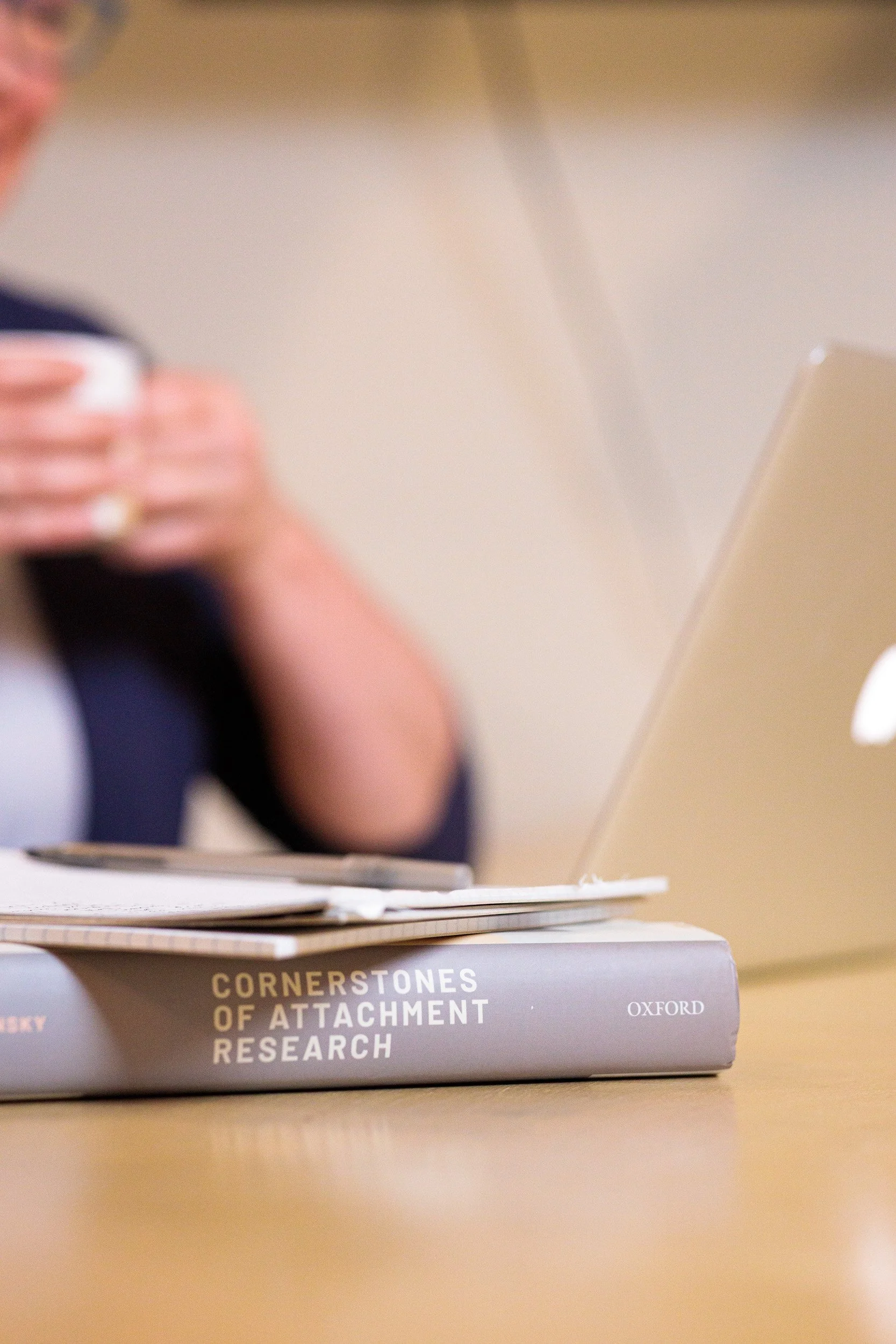
The models I use are called Attachment Sciences, Circle of Security, EMDR, Wheel of Consent, and Mindfulness. If you want to read more about these, I have some blog posts that expand on what they are and how they fit beautifully together to help people build secure lives.
How do you work?
Couple’s Therapy? You bet.
Deepening Connection and Repairing Bonds
It’s a strange feeling to love someone yet not be sure how to live with them. You’re stuck in a cycle that leaves you feeling disconnected, perhaps angry, and probably alone.
My role as a couple’s therapist is straight-forward: help you each be in touch with yourself while you’re also aware of what is happening in your partner’s inner world. It’s from this place that you two can sort through the day-to-day conflict and find your way forward.
Your questions answered
-
Okay, here’s the nitty-gritty.
I primarily align with the attachment sciences, which show unequivocally that we’re wired for both connection and autonomy. Distress often arises when these are disrupted—whether through relationships or internal conflicts- and is best relieved through consciously mapping and understanding these internalized patterns.
My experience includes helping clients address these disruptions, whether rooted in current challenges or past experiences. I’ve worked with folks struggling with cPTSD, depression, anxiety, and lots of other things.
I am extensively trained in attachment models like Circle of Security, Child/Parent Psychotherapy, and ARC, as well other models such as EMDR and CBT. I also heavily use the Wheel of Consent in my practice and a model of communication called Authentic Relating.
-
I take a direct but non-directive approach, working to facilitate your healing rather than dictating it. While I bring expertise, you are the expert on your life. Our sessions will be a space of respect, acceptance, and loving challenge as we deepen your understanding of yourself and your relationships.
Clients who benefit most from my approach are those seeking meaningful change and a deeper connection with themselves, rather than quick fixes or surface-level problem-solving.
We won’t just focus on the events of your week, we’ll listen to how you experience them in a way that highlights your patterns, your ‘subtext’, and gives you greater access to conscious choice.
It’s this choice that puts you back in the driver’s seat, creating and building your life rather than just reacting to what happens.
-
Yes and yes! I’m located in Spokane, WA and have an office in the downtown area.
However, since I see clients all over Washington State, I offer sessions conveniently via a HIPAA secure platform. This ensures your privacy and makes accessing psychotherapy services easy no matter where you are.
-
Depends on you. Folks who get the most out of sessions with me are those who engage fully in the process. This doesn’t mean always leaving with glorious insights or feeling great- actually far from it. It does mean digging in, letting yourself show up fully and honestly, and taking excellent care of yourself in between sessions.
Most folks are with me for several years. It seems like a long time, but remember that the pain you’re unpacking took decades to form. Going at your body’s pace means letting yourself take in change in manageable doses and this takes time.
After the initial chapter of work, many clients drop in as needed for shorter term episodes of care. My philosophy? Once a client always a client. If we’ve closed one chapter, I’m here when you’re ready to do another.
-
Individual sessions lasting 50-55 minutes are $180.
Couple’s sessions are 75 minutes and $225.
Group cost varies by group.
-
For many therapists, taking insurance is a minefield of ethical dilemmas (this ProPublica article gives some insight if you’re interested). For this reason, I am an out-of-network provider which means I don’t contract with insurances or submit insurance claims.
Most insurance plans have out-of-network benefits that will cover a portion of your mental health services.
I provide clients who wish to use their out-of-network benefits with a superbill, thus allowing them to submit a claim to their insurance for reimbursement based on your individual plan.
One important note! Couple’s counseling is usually not covered by insurance even with a superbill.
-
My office hours are Monday - Friday, typically from 9 am - 4 pm. Sessions are usually just under an hour, although our first session will be longer to cover all the paperwork. After we get started, most folks meet with me for one 50-55 minute session a week. Some folks prefer to do longer intensive sessions (several hours, often several days in a row) and some folks prefer shorter (25-30 minutes). If you’re interested in something like this, let me know and we can talk about what is the right fit.
-
Oh, I’m SO glad you asked.
I’m most particularly interested in the puzzle which lives in between insecure attachment (from patterns growing up) and learning secure attachment as an adult (through present day relationships).
Isn’t that interesting? How relationships can both be the source of the wound but also the solution to it? This is exactly why I use the models I do (Attachment Sciences, Circle of Security, Authentic Relating, EMDR, Wheel of Consent). When you put them together, my very strong belief is that you get a map to living securely.
I’m also very curious about the philosophy of minimalism as a route to good mental health. In fact I have an entire separate blog dedicated to my thoughts on this!
Should we move forward together?
Here’s the last thought I can offer.
Starting therapy with a new person takes courage. Every time you open up, you're beginning the process of developing trust. This trust is the foundation on which your healing will be built, and I recognize the importance of finding a counselor who, above everything else, makes you feel safe and heard.
No matter where you are on your journey, the fact that you're here means that you have already taken a courageous step of reaching out and that you’re open to the possibility of feeling better, whatever ‘better’ means for you.
Please feel free to contact me if you have any questions about my approach or style as a psychotherapist.
Whether you chose to schedule with me or someone else, you have my warmest wishes on your path to wellness.